Home renovation and remodeling in New York City
We have worked on the outside of New York buildings for years — the brick, the facade, the roof, the concrete. Interior renovation is the same company and the same licence doing the inside: kitchens, bathrooms, basements and the general work that goes with them.
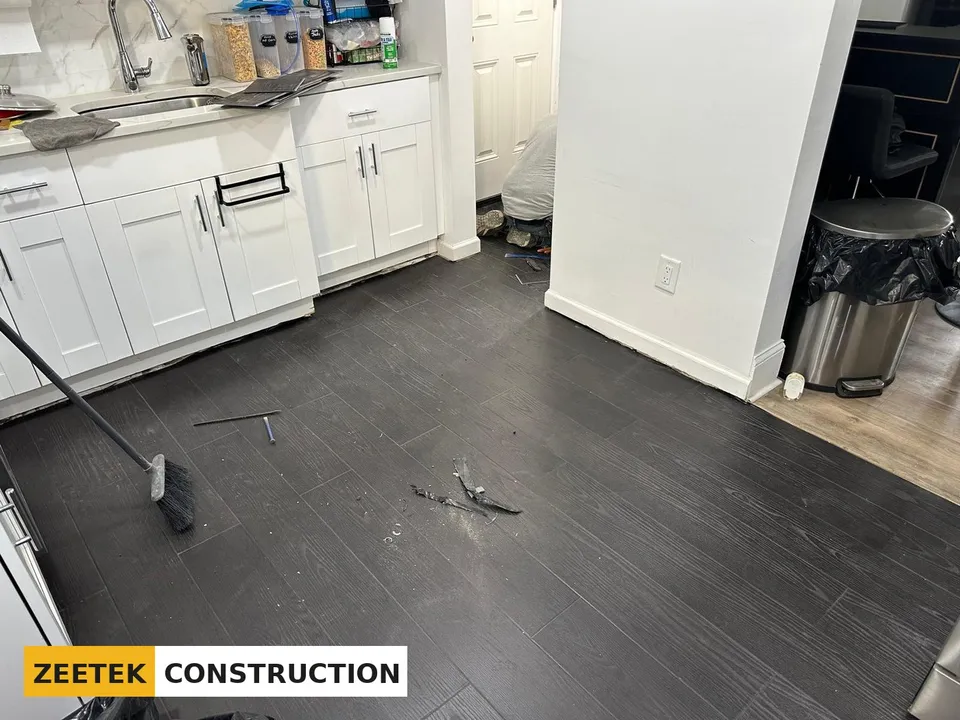
This page spends most of its length on licensing and permits rather than on finishes, because that is where renovation work in this city actually goes wrong, and because it is the part you can check about any contractor before you hire them, including us.
- NYC DCWP licence 2135523-DCWP
- DOB-registered General Contractor
- Free written estimate
Call (929) 412-6597 Describe it on WhatsApp
What we do inside
Kitchen remodeling
Where the plumbing and the gas line decide the cost, long before the cabinets do.
Bathroom remodeling
The waterproofing behind the tile is the job. The tile is the finish.
Basement finishing
What a basement can legally become in New York, and what a cellar cannot.
Alongside those: drywall and plaster repair, ceilings, partition walls, skim coating and the making-good that every one of these jobs ends in.
The two licences a renovation contractor needs, and why both matter
New York asks for two separate things, and a great many people doing this work hold only one of them. The city’s own guidance puts it plainly: an alteration to a one-, two-, three- or four-family dwelling requires a Home Improvement Contractor licence — the DCWP one — in addition to a General Contractor licence, and the Administrative Code separately requires general contractors to register with the Department of Buildings.
We hold the DCWP Home Improvement Contractor licence, shown in full with its expiry date on our licence and insurance page so you can look it up rather than take our word for it, and we are registered with DOB as a General Contractor.
Why this is worth two minutes of your time: an unlicensed contractor cannot pull a permit, which means either the work happens without one or somebody else’s licence is borrowed for it. Both leave the problem with you, as the owner, when the building is sold or refinanced and the paperwork does not match what is there.
Who actually touches the pipes and the wires
On our jobs, plumbing and electrical work is carried out by licensed subcontractors, not by our own crews. That is not a gap, it is how the work is meant to be done here: plumbing and electrical permits are issued separately to the individual licensed contractors who perform them, not to the general contractor running the job. A master plumber pulls the plumbing permit; a licensed electrician pulls the electrical one.
So when we quote a kitchen or a bathroom, the licensed trades are named line items rather than something folded into a round number. If a quote you are comparing does not mention them at all, it is worth asking who is doing that part and under whose licence.
What needs a permit and what does not
Not every job needs a DOB permit, and we will tell you which yours is before you commit rather than after. As a working rule, the things that reliably bring permits and licensed trades into a renovation are:
- Moving plumbing — relocating a sink, a toilet or a shower, as opposed to replacing one where it stands.
- Gas work of any kind, including moving or adding a range connection.
- Electrical work beyond swapping a fitting: new circuits, new outlets, a panel.
- Taking out or putting in walls, and anything that changes the layout or the use of a room.
Replacing cabinets, fixtures, tiling and finishes where everything stays where it is sits at the other end of the scale. Most real jobs are a mixture, and the honest answer is that the scope decides the paperwork, which is why we work the scope out first.
If you are in a co-op or a condo
Your building is a second approval process running alongside the city’s, and it is usually the slower one. Most buildings require an alteration agreement before anything starts: drawings, the contractor’s licence and insurance certificates naming the building and the managing agent, agreed working hours, and often a deposit.
Tell us at the first conversation if you are in one. We will send the certificate of insurance in the form your managing agent needs — naming them, which has to be arranged with the insurer rather than typed in by us — and we will schedule the work to the building’s hours rather than discovering them in week one. Certificate of insurance available on request.
Older buildings: the two things to raise before demolition
Most of the housing we work in is pre-war, and two things in it are specialist work that we do not self-perform and will not quietly disturb: asbestos, which turns up in old pipe lagging, floor tiles and their adhesive, and lead paint, which is routine in buildings of that age. Both have their own licensed procedures and their own testing.
If a job looks likely to disturb either, we say so before demolition and the testing happens first. A contractor who rips out a pre-war bathroom without raising it is not saving you money, they are moving a problem into your air.
What we are, and what we are not
We are a building contractor. We are not architects, we are not interior designers, and we are not a design-and-build studio that will produce a mood board. If your job needs drawings filed with the city — and a change of layout usually does — that is an architect or engineer, and you engage them directly rather than through us. We will tell you at the first visit whether yours is one of those jobs.
What we are good at is the part in between the drawing and the finish: taking a space apart without wrecking what stays, getting the licensed trades in the right order, and making old walls, old floors and new cabinets agree with each other. That last one is most of the skill in renovating pre-war New York housing, and it is where a job either looks finished or looks nearly finished.
There is also a limit to what rearranging a floor plan can achieve. If the rooms you want do not exist and cannot be carved out of the ones that do, you are not looking at a renovation at all — you are looking at an addition, which is a different filing, a different approval and a different order of cost. The test is simple enough to apply yourself: a renovation works within the floor area the house already has, and an addition adds to it.
How we price it, and what we will not do
Every estimate is an itemised written scope of work, with exclusions stated. Half when the work starts, half on completion. Renovation is the work where hidden conditions are most likely, so the estimate states what we have assumed about what is behind the wall and what it costs if we are wrong, instead of leaving it to a change order and an awkward conversation.
What we will not do: start demolition before the permits that the scope needs are in hand, self-perform plumbing or electrical work, or quote a kitchen from a photograph. And our warranty is one sentence rather than the word guaranteed: Two-year written warranty on our workmanship, from the day the job is signed off.
Already have a written quote? Send it over. We will go through it with you line by line, tell you what it covers and what it leaves out, and give you ours against the same scope.
Who is actually on site
One point of contact for the whole job, not a different number for each trade. Ask for Shan. You will be told when the licensed trades are coming and what they are there to do, and if something is found behind a wall you will hear it the same day rather than at the end of the week.
The Bronx, Queens, Brooklyn, Manhattan and Staten IslandTell us what you are thinking about
Photographs of the room as it is now, a rough idea of what you want it to become, and whether you are in a house, a co-op or a rental building. That is enough for a first answer about scope, permits and rough range. The estimate page builds the message for you.